Test Your Instagram Reels Idea Before Posting
Most Reels are decided before you film. Learn how to test an Instagram Reels idea before posting: feed demand, a sound-off hook check, a scored workflow.
Why most Reels fail before you hit record
Most Reels do not fail because the edit was sloppy or the sound was last month's trend. They fail at the idea stage, before anything was filmed, because the concept was never tested against what actually works in the niche. Instagram decides fast: a Reel gets its shot in the feed, watch time comes back low, and distribution quietly stops.
By then, every decision that produced the result was locked in. The premise. The first second. The payoff. Whether it loops. Your insights can tell you a Reel underperformed, but insights read the past. They do not refund the evening you spent filming and cutting.
The usual response is to polish harder on the next guess: cleaner transitions, a newer sound, sharper color grading. Polish is not nothing on Instagram, but it cannot rescue a premise nobody wants to finish. Whether people watch to the end, rewatch, and send the Reel to a friend is decided mostly by what the Reel is, not by how clean it looks.
So run the test while the idea is still cheap to change. A weak hook caught at the idea stage costs you one rewrite. The same weak hook caught in your insights costs the whole production, plus the days you waited for the numbers to confirm it.
What testing a Reels idea actually means
Testing a Reels idea means comparing it against evidence before you film: what is currently working in your niche, whether your hook can survive a 1 to 3 second attention window, and whether the concept can hold viewers to the end and pull them back to the start. It is not asking your followers. It is not posting to find out.
Reels raise the stakes in one specific way: distribution is recommendation first. A large share of your reach can come from people who do not follow you, so the viewer who decides your Reel's fate is a cold viewer with zero context and zero loyalty. Your followers' comments and your friends' opinions are the warmest possible test audience for the coldest possible distribution system.
A real test simulates that cold viewer instead: no context, sound possibly off, thumb already moving.
Will this Reel go viral? Here is what you can actually know
No one can tell you with certainty whether a Reel will go viral, and you should be suspicious of anyone who claims otherwise. Too much depends on timing, competition, and how the first hours of viewers happen to respond. What you can know before posting is whether the idea carries the patterns that give a Reel a real chance.
Those patterns are learnable. Hooks that stop a scrolling thumb share recognizable structure. Reels that loop cleanly collect rewatches, and rewatches feed watch time. Niches have baselines you can measure against. A proper test does not hand you a prophecy. It hands you a probability edge and a to-do list: what is weak, why it is weak, and what to change before you spend a shoot on it.
Instagram Reels ideas worth testing: where to find them
The strongest Instagram Reels ideas usually come from evidence, not from staring at a blank note: Reels in your niche that clearly outperformed the account that posted them, formats that keep resurfacing with new topics, and your own comment section asking for more.
- Mine your niche's outliers. Look for Reels that did far better than the account's normal numbers. A small account breaking out is the most honest signal a format has, because the reach came from the idea, not from an existing audience.
- Steal the structure, not the topic. When a Reel blows up, ask what shape made it work: how the first second was framed, how fast value arrived, how the ending looped back. Structures transfer to your topic. Copied topics age within a week.
- Reread your own comments. Questions under your past Reels are demand from people who already watch you. Answering one specific question is a premise with proof attached.
- Keep a dated idea bank. Write every idea down with the date. Ideas built on stable demand still look good two weeks later. Ideas chasing a spike usually do not, and the date makes the difference obvious.
This post covers the Reels-specific moves. The platform-independent deep dive, with all five checks in full detail, lives in our guide on how to test a video idea before posting.
Five checks for a Reels idea
You can stress-test a Reels idea in about half an hour with five checks: feed demand, fit, hook, payoff and loop, and angle. None of them require followers, a budget, or an audience to poll.
1. Feed demand: is the format pulling above baseline right now?
Search demand barely matters for Reels; feed demand is the real market. Scan your niche: which premises, formats, and structures are currently doing better than the accounts posting them normally do? That is live demand you can build on.
Green light: several recent Reels on the premise outperforming their accounts' baselines. Red flag: the only examples are months old, or they all sit below what those accounts usually get.
2. Fit: would your last three viewers want this one?
A trending premise outside your niche is borrowed reach. The viewers it attracts did not come for you, they will not stay for what you post next, and they teach the recommendation system the wrong lesson about who your account is for.
Ask one question: would the person who watched my last three Reels want this one? If the honest answer is "but it is trending," the idea fails this check.
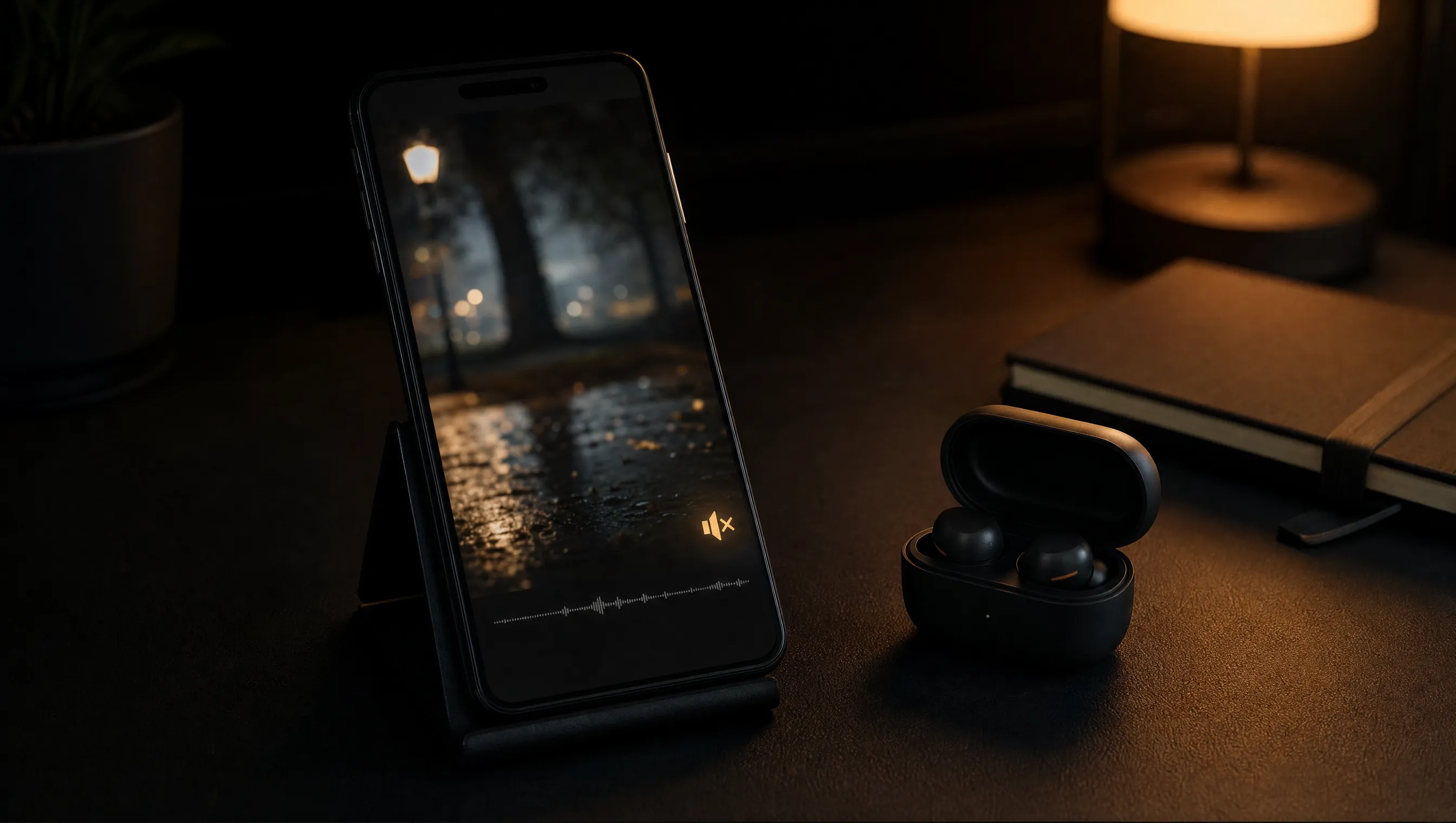
3. Hook: does it work in 1 to 3 seconds with the sound off?
A Reels hook is not just a spoken line. It is the first frame, the first movement, the on-screen text, and the first line of the caption working together, and it has to work muted, because plenty of viewers scroll with the sound off. Write the literal opening, then storyboard the literal first frame.
Green light: a first second that creates a question or a concrete promise, readable without audio. Red flag: your opening explains what the Reel is about, or spends its first second on a logo sting and a greeting. Explaining is not hooking, and a cold viewer does not know you yet.
4. Payoff and loop: does it keep the promise and invite a rewatch?
The hook makes a promise the rest of the Reel has to keep, fast. Value should arrive within seconds, not after a long setup, because a viewer who feels baited leaves early and takes your watch time with them. Then check the loop: does the ending connect back to the opening so a second watch feels natural instead of accidental?
Green light: payoff arrives early, and the last beat flows back into the first. Red flag: one payoff buried at the end behind setup, with an ending that just stops.
5. Angle: what does your version add?
If fifty Reels already exist on the premise, the fifty-first needs a reason to exist: a sharper take, better proof, more speed, a stronger opinion, or simply more you. Fill in this sentence honestly: "Unlike the existing Reels on this topic, mine will ___." If the blank stays empty, the idea is not ready to film.
Score the Reels idea before you film
The five checks filter out the obvious misses. What they cannot do is weigh six surviving ideas against each other, and that is where most advice quietly hands you back to your gut. A scored test replaces the gut call with a number you can compare, argue with, and improve.
PreViral Score asks for your platform, in this case Instagram Reels, plus your niche and country. Then the idea itself: the caption, the 1 to 3 second hook, the payoff, the planned length, and the loop potential. It scores the idea against what works in that exact context. 58 niches, 5 platforms, and 30 countries make 8,700 contexts, so a fitness Reel aimed at the US is not graded like a cooking Reel aimed at Germany. You get a 0-100 read in about 60 seconds.
Read the zone, not just the number: NEEDS WORK (0-30) means rework the concept. AVERAGE (31-60) means the core is there but the flagged weaknesses will cost you reach. GOOD (61-80) means fix the priorities and film. EXCELLENT (81-90) means polish what remains. VIRAL READY (91-100) means stop tweaking and start producing. Behind the number sit 10 frameworks that each grade one part of the idea, so the result reads like a to-do list rather than a verdict. The full pipeline is explained on how PreViral works.
What the loop looks like in practice: your recipe Reel scores 54, AVERAGE, and the fix list flags the hook, because your first second shows your kitchen logo instead of the dish. You rewrite the opening to start on the finished plate with a claim on screen, re-score, and land at 79, GOOD. Same recipe, same effort to film. The difference is that the weak first second cost you a rewrite instead of a finished Reel.
Trying this costs nothing to start: the Free plan includes 3 scores per month, each with the full framework-by-framework fix list. The paid plans add volume.
Test the finished Reel before you post it
A validated idea can still leak watch time in the cut. The hook that read great on paper runs five seconds in the edit. The text overlay covers the exact moment that sells the payoff. The audio is muddier than you noticed at 1 a.m.
PreViral Analysis runs the final check. You upload the finished file, and the first stage measures what is actually on screen: how many seconds the hook takes, cuts per minute, pacing, on-screen text, audio quality. The second stage scores those measured signals against the same 10 frameworks for your niche and platform, and returns a 0-100 score with a timestamped fix list. "Tighten the opening" points at an exact second in your Reel instead of at a vibe.
This is the honest answer to the late-night "should I post this Reel?" spiral: measure the cut, fix what is fixable tonight, and post on purpose.
How we keep our scores honest
Any tool can claim its scores mean something. The claim is cheap, so hold every scoring tool, including ours, to one standard: never trust a score that will not show you its misses.
PreViral publishes a public prediction ledger, the Track Record. Predictions are locked in before the results exist, measured against real outcomes at 7 and 30 days, and the misses stay visible. The ledger currently tracks fresh YouTube videos, and the same 10 frameworks power the Reels scoring. We publish every prediction, including the misses, so you can judge the scores by their receipts.
Common mistakes with Reels ideas
- Testing by posting. "Just post more" sounds like hustle, but every untested Reel spends hours of production to buy information a test would have given you in a minute.
- Auditioning the sound instead of the idea. A trending sound can help a strong idea travel. It cannot carry a weak one, and by the time a trend is obvious, it is usually crowded.
- Opening with branding. Logo stings and "hey guys, welcome back" burn the 1 to 3 seconds that decide everything. The cold viewer in the Reels feed does not know you yet, and the greeting gives them no reason to change that.
- Reposting with the watermark on. A TikTok export with the watermark still visible reads as recycled content, to viewers and by Instagram's own guidance to creators. If the idea deserves a second platform, it deserves a clean export.
- Reading likes instead of watch time. Likes flatter, but retention, rewatches, and sends are what distribution runs on. When you review your own results, start with how long people watched, not how many tapped a heart.
FAQ
How do I know if my Reel will flop before I post it?
Do not decide on a feeling. Run the finished cut through a final check and act on the result: in the GOOD zone (61-80) or above for your niche, post it. In NEEDS WORK with structural problems, meaning the premise itself is the issue, rebuild it. If the flagged problems are fixable in the edit, fix them tonight and post a stronger Reel tomorrow.
Do I need a big following for a Reel to go viral?
No promise attached, but follower count is not the ceiling. Reels distribution is recommendation first, so reach depends heavily on how cold viewers respond to the idea and the hook. That is also why testing against your niche matters more than the size of your current audience.
Should I use trending audio on every Reel?
No. Use a trend when it genuinely fits the idea. A strong premise with original audio beats a weak premise with a trending sound, because the sound gets the impression at best, while the idea decides whether anyone stays past the first second.
How long does testing a Reels idea take?
The five manual checks take about 30 minutes. A scored test takes about a minute: enter the caption, hook, payoff, length, and loop potential, and get a 0-100 read back. The Free plan includes 3 scores and 1 analysis per month, so testing your next Reel idea is free.
Does the same test work for TikTok and YouTube Shorts?
Yes. The five checks apply to any short-form feed, and the scored test adjusts automatically once you pick the platform, grading the same idea against TikTok or Shorts patterns instead. The workflow stays identical: test the idea, fix what the test flags, then film.